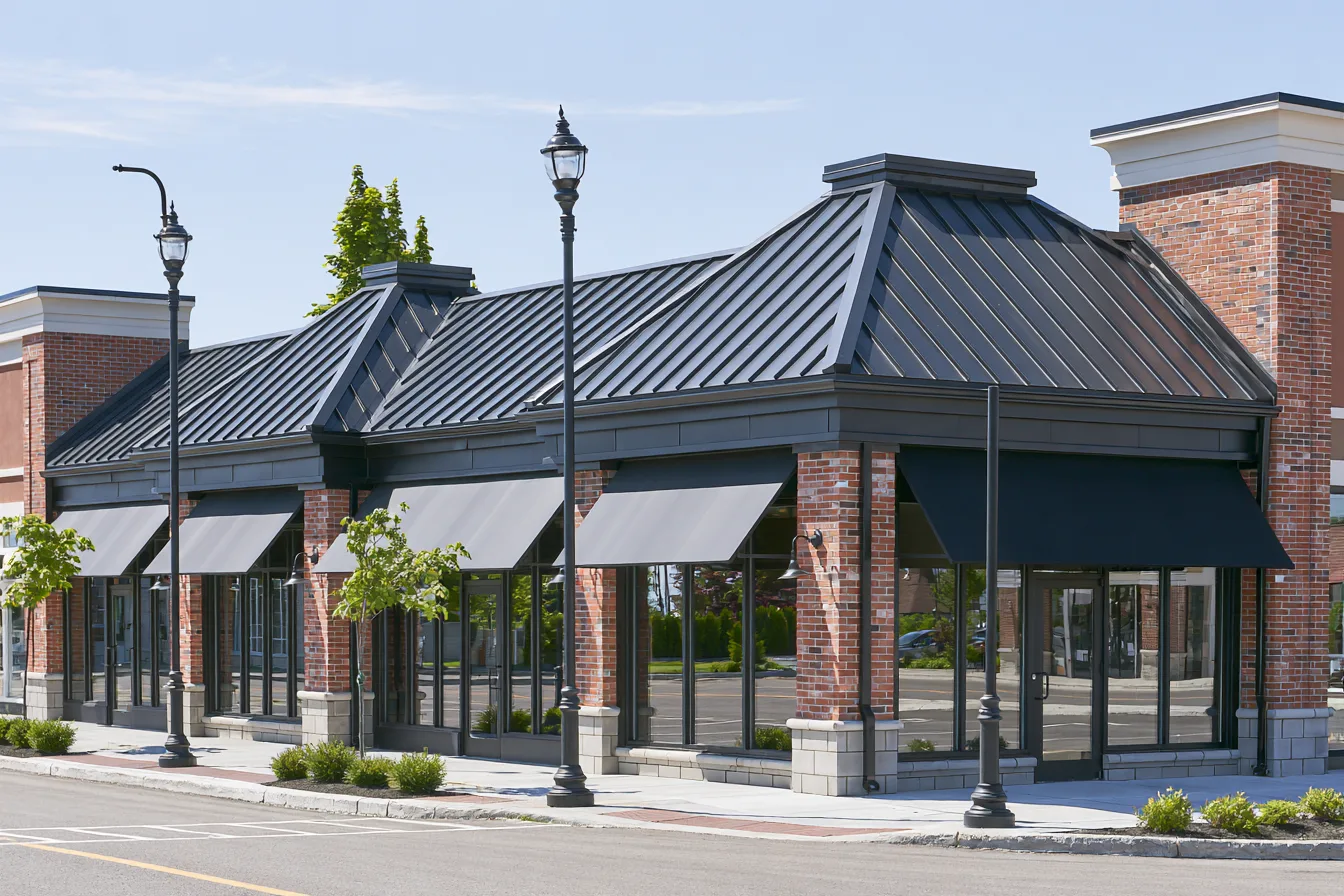
Roofing in Downtown Duncanville
Main Street buildings and the neighborhood streets around them carry different roofs with the same problem: water finding the weak detail. Start with a free inspection of the roof you have.
Tracing a leak above a Main Street storefront
If your building is one of the older storefronts with a low-slope roof behind a parapet, water does not run off it the way it runs off a house. It has to reach a drain or a scupper, and anything that slows it down gives it time to find a seam. So when a ceiling tile in the shop goes soft, the roofer looks first at the places where the roof surface is interrupted: the parapet cap and the flashing where it turns down the wall, the scuppers and drains, the curbs under rooftop units, and the pipes and vents that pass through the membrane.
The downtown district runs along Main Street from the I-20 frontage road down to Wheatland Road, and the city's plan for it leans on reusing the buildings that are already there rather than clearing them. That is good news for the street, and it puts the roof at the front of the conversation. A building that has sat vacant or changed tenants a few times can have a roof that was patched around each problem instead of repaired through it. Before a new use goes in, someone needs to know what the membrane, the insulation under it and the deck under that are actually doing.
A free inspection puts a roofer on the roof to investigate the entry point. A flat roof repair needs sound adjoining material, a compatible repair detail and support beneath it. Open seams across several areas or moisture below the membrane call for a wider assessment. That is useful information before a new tenant moves in.
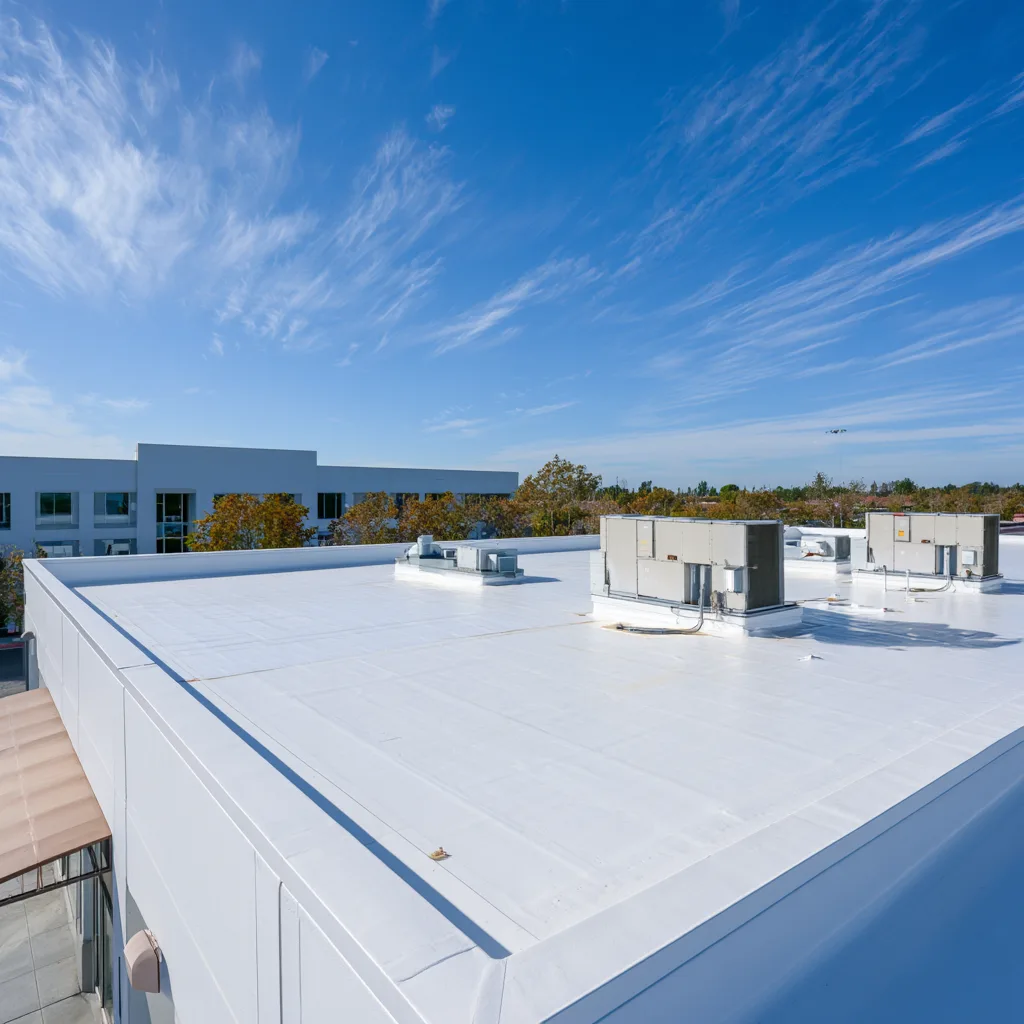

Before a downtown building gets its second life, settle the roof
Before a building takes on a new use, its roof history and current condition need to be understood. These three questions help define the investigation.
Is the insulation wet?
A roof can look intact from the hatch while moisture remains beneath it. Wet insulation loses thermal performance and can keep supporting materials damp. A moisture survey, followed by confirmation where needed, helps locate the affected material. The extent of moisture, deck condition, existing layers and the proposed system all matter when comparing repair, coating, a recover with a new membrane or tear-off. Wet material needs to be addressed before a new surface is installed.
Are the drains carrying water off?
Standing water after rain calls for a drainage check. Debris, a blocked outlet, a low area or deflection can keep water on the roof. The inspection looks at the water depth, drainage route and supporting assembly. Persistent ponding can stress details and add load; repairing a leak without understanding the drainage leaves part of the problem unresolved.
What is on the roof, and how does it get up there?
Rooftop units, sign supports, satellite dishes and old vent stacks each punch through the membrane, and each one needs a curb or a flashing that sheds water. The district's design standards ask that equipment on a new or redeveloped building stay out of sight from the street, which is a facade question. The flashing around that equipment is a roof question, and it is where a roofer spends time on an inspection.
The houses around downtown carry their own roof histories
A few blocks off Main Street, the roofing conversation shifts to houses, porches and additions. Duncanville grew rapidly between 1960 and 1980, but a city growth period does not date the roof on a particular home. Repair records and the roof itself help establish whether there are reused flashings, more than one shingle layer or changes where an addition meets the original house.
A roofer checks how a proposed repair can join the existing roof. The adjoining shingles must be workable, the replacement material compatible, and the deck and flashing connections sound. Brittle shingles can widen the area that needs work, but flexibility alone does not settle the repair. A chimney, porch tie-in and rear addition each deserve attention because flashing has to carry water across those joints.
If a stain has shown up, or the roof simply has not been looked at in years, a free roof inspection starts from the roof you actually have. It sorts the roof into what needs attention now and what can wait, and asking commits you to nothing.
Storefront, mixed-use building or house: what gets settled first
A roof problem downtown starts in a different place depending on what is under it.
| Property | Where the roof conversation starts |
|---|---|
| A single-story storefront | The membrane, the parapet flashing and the drains. Tell us where water shows inside and whether it follows every rain or only the heavy ones. Access from the alley or a roof hatch matters for scheduling. |
| A mixed-use building with apartments above | One roof, several occupants. A top-floor tenant may notice the leak first, while the owner or manager authorizes work. The roofer needs access to the affected space and the roof. Start with commercial roofing. |
| A house on the streets around downtown | Start with the room where water appeared and the connected roof details. A roof repair can address a failed boot, flashing joint or contained damage when the adjoining materials and supporting assembly allow a reliable connection. |
Downtown Duncanville roofing FAQs
Does the Downtown District zoning change how I re-roof my building?
The district standards cover building design and form along Main Street. The approval path depends on the scope: changing roof form, equipment screening or a building use can raise different questions from replacing a covering. Development Services can confirm what applies to the property before work is settled. The Duncanville roof permit guide explains the permit side.
Can a coating stop the leaks on a Main Street roof?
A coating can be part of restoring a roof that qualifies. Existing membrane compatibility, adhesion, drainage, attachment, moisture and deck condition all matter. Open details and affected materials need an appropriate repair scope first. A moisture survey helps locate wet areas; it does not by itself establish that the whole roof is suitable for coating.
My house near downtown stains the ceiling next to the chimney after heavy rain. Is that the roof?
It can be the roof, and it can be the chimney itself. Flashing that has pulled away from the brick hands every rain a gap, while a cracked chimney crown or open mortar lets water down through the masonry. A roofer separates the two on the roof, because the repairs are different.
Get a look at your downtown roof
Tell us the building or the street, what you have noticed and when it started. A free inspection starts there.