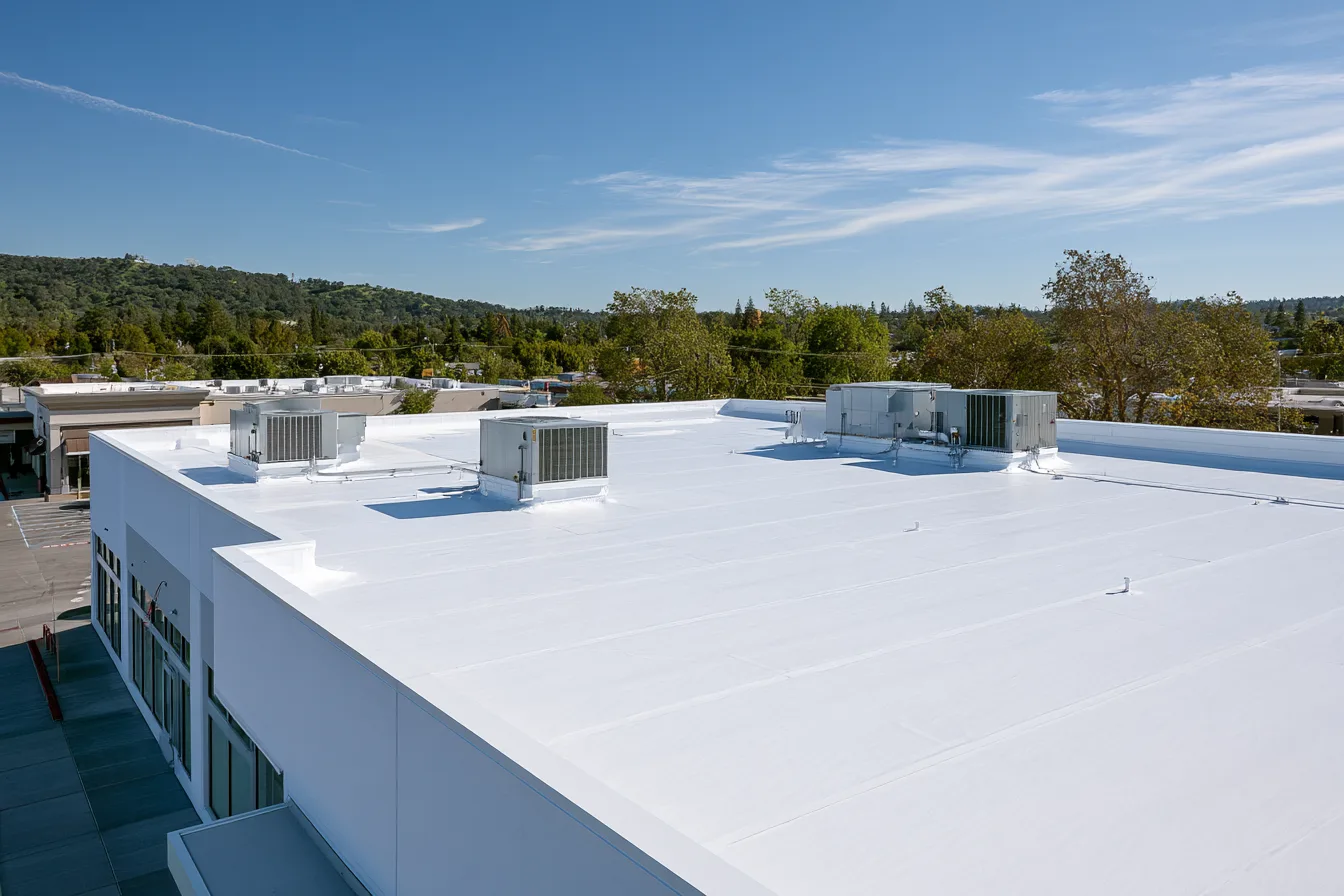
TPO roofing in Duncanville
TPO is a single-ply thermoplastic membrane used on low-slope roofs. Its seams and equipment details need to work with the insulation, attachment and drainage below.
TPO roof repairs for Duncanville buildings
Sheets of TPO are joined with heat-welded seams. At a roof curb, pipe or parapet, the flat sheet has to become a shaped, sealed detail. Those transitions deserve attention when a leak appears even if the open field of membrane looks intact.
A repair needs clean, compatible material and a sound weldable surface. Age, contamination and the condition of the existing membrane affect how a new patch or flashing can be joined.
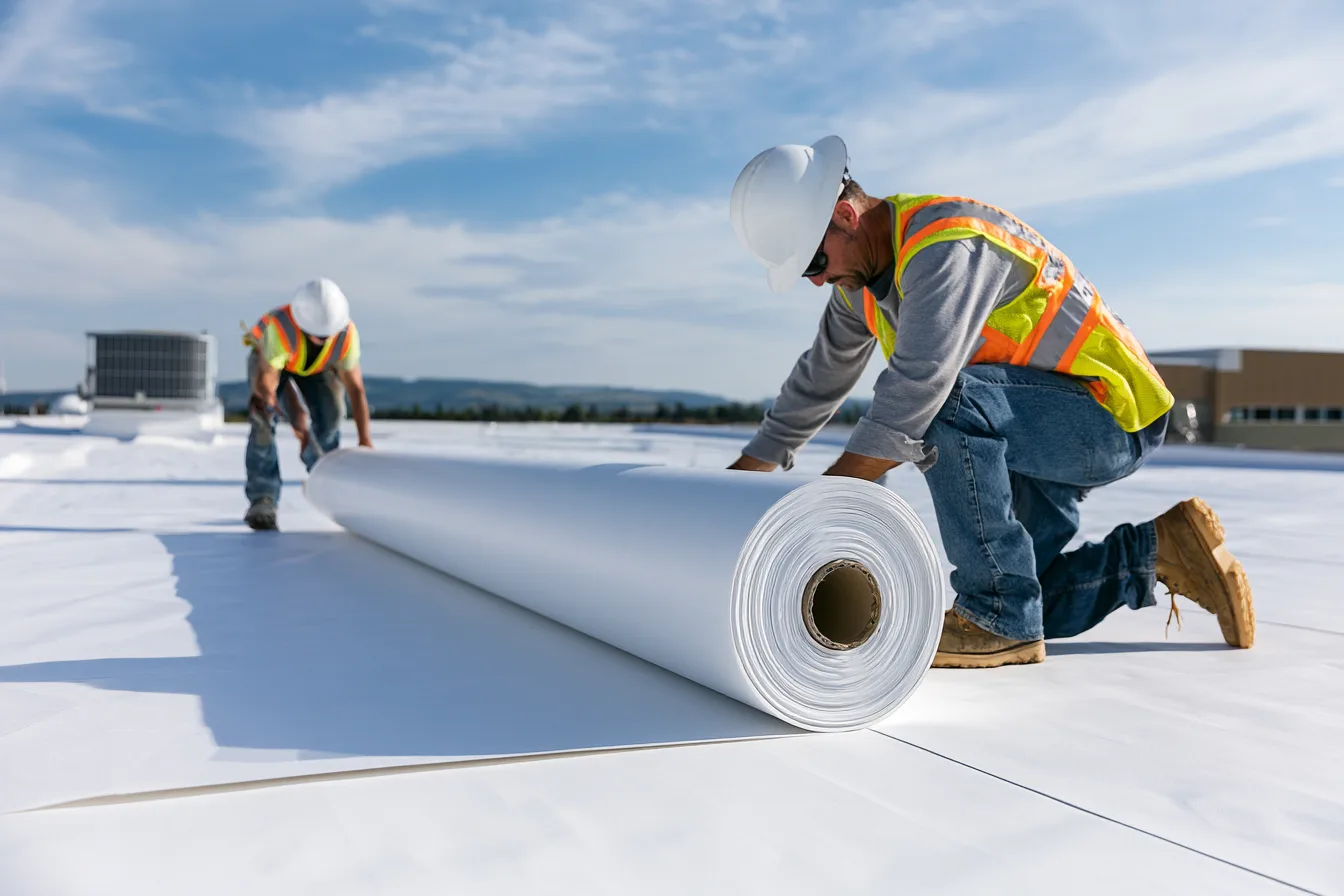
Preparing a Duncanville building for new TPO roofing
Start by establishing which layers are dry, firmly attached and suitable to remain. Wet insulation and damaged decking need to be exposed and addressed; keeping them under a new membrane leaves the defect in the assembly. Where a recover is appropriate, preparing the retained roof still matters. Removal, disposal and rebuilding can account for a substantial difference between two TPO proposals.
Set the insulation and water route
The insulation and any cover board form the base for the membrane. Tapered insulation can help direct water toward drains where the design calls for it. Low spots, drain connections and curb heights need to be resolved with these layers, before the new sheet covers them.
How the TPO attachment changes the work
With the base prepared, the membrane needs a specified way to resist wind forces through the roof assembly. These two common approaches affect the substrate preparation, materials and installation time.
| Attachment approach | What the work involves |
|---|---|
| Mechanically attached membrane | Plates and fasteners secure the sheet at specified locations through the supporting layers into the deck. The deck must hold those fasteners, and the layout responds to the roof’s wind design. Deck condition, fastener length and the required fastening pattern therefore belong in the scope, rather than being assumed from roof area alone. |
| Adhered membrane | Adhesive bonds the membrane across an approved substrate. That surface has to be clean, dry and compatible so the bond can form; adhesive coverage and the product’s application conditions affect the work. Insulation or cover board beneath the sheet still needs its own secure attachment, which can include fasteners. An adhered membrane does not mean every roof layer is glued or that preparation disappears. |
TPO installation details and phasing in Duncanville
The broad sheets cover the open roof. The connections make that covering continuous at the places water can get through.
After the membrane is secured, adjoining sheets are heat-welded and the seams checked. Curbs, pipes, drains and perimeter edges need compatible flashing and secure terminations. These details are part of the installation, not finishing extras to leave until a leak appears. A localized repair follows the same principle: it needs a sound surrounding surface and attention to any affected layers below.
For an occupied Duncanville building, the work also needs a plan for staging, rooftop equipment and weather. The area opened in a day must be capable of temporary watertight closure when work stops. Equipment that must be moved involves the appropriate trade; service paths to units may need membrane protection. Removal, insulation, attachment and this detail work explain more about a TPO project’s cost than membrane thickness alone.
Duncanville TPO Roofing FAQs
Can TPO be patched in Duncanville?
A localized defect can be repairable when the surrounding membrane is suitable for a compatible repair. The condition underneath the defect matters too.
Is every white commercial roof TPO?
No. PVC, coatings and other light-colored systems can look similar. Identifying the installed material is necessary before selecting a repair.
Does thicker TPO eliminate leaks?
No. Thickness is one product choice. Seams, flashings, attachment, drainage and installation all remain part of the system.
Discuss the TPO roof on your Duncanville building
Tell us where the leak is affecting the building and what you know about the existing membrane.